


A krónikus vesebetegségben szenvedő idősebb felnőttek testösszetételének megértése
Idős, krónikus vesebetegségben szenvedő felnőttek számára (CKD), Az egészségi állapot sokkal összetettebb annál, mint amit a skálán egy szám meg tud mondani.
A testtömeg viszonylag stabil maradhat, miközben az izomtömeg csökken, nő a testzsír, és a fizikai funkciók megváltoznak.
Ez az oka annak, hogy a geriátria és a krónikus betegségek kezelésével kapcsolatos kutatások egyre inkább a súlyon és a BMI-n túl a betegség teljesebb megértése felé irányulnak. testösszetétel -elemzés.
A 2026 a kutatók által végzett tanulmány “Iuliu Hatieganu” Orvosi és Gyógyszerészeti Egyetem, és megjelent Tudományos Jelentések, a Springer Nature portfólió része, ezt a kérdést a krónikus vesebetegségben szenvedő idősebb felnőttek populációjában vizsgálta.
A tanulmány tartalmazta 222 éves betegek 70 és régebbi és átfogó geriátriai értékelést használt a multimodális testösszetétel elemzés mellett a szarkopénia kapcsolatának vizsgálatára, elhízottság, szarkopén elhízás, valamint a halálozás és a rokkantság becsült kockázatai.
A tanulmány részeként, kutatók használták a Visbody S30 BIA alapú testösszetétel méréshez, az izomtömeg CT-alapú felmérése mellett.
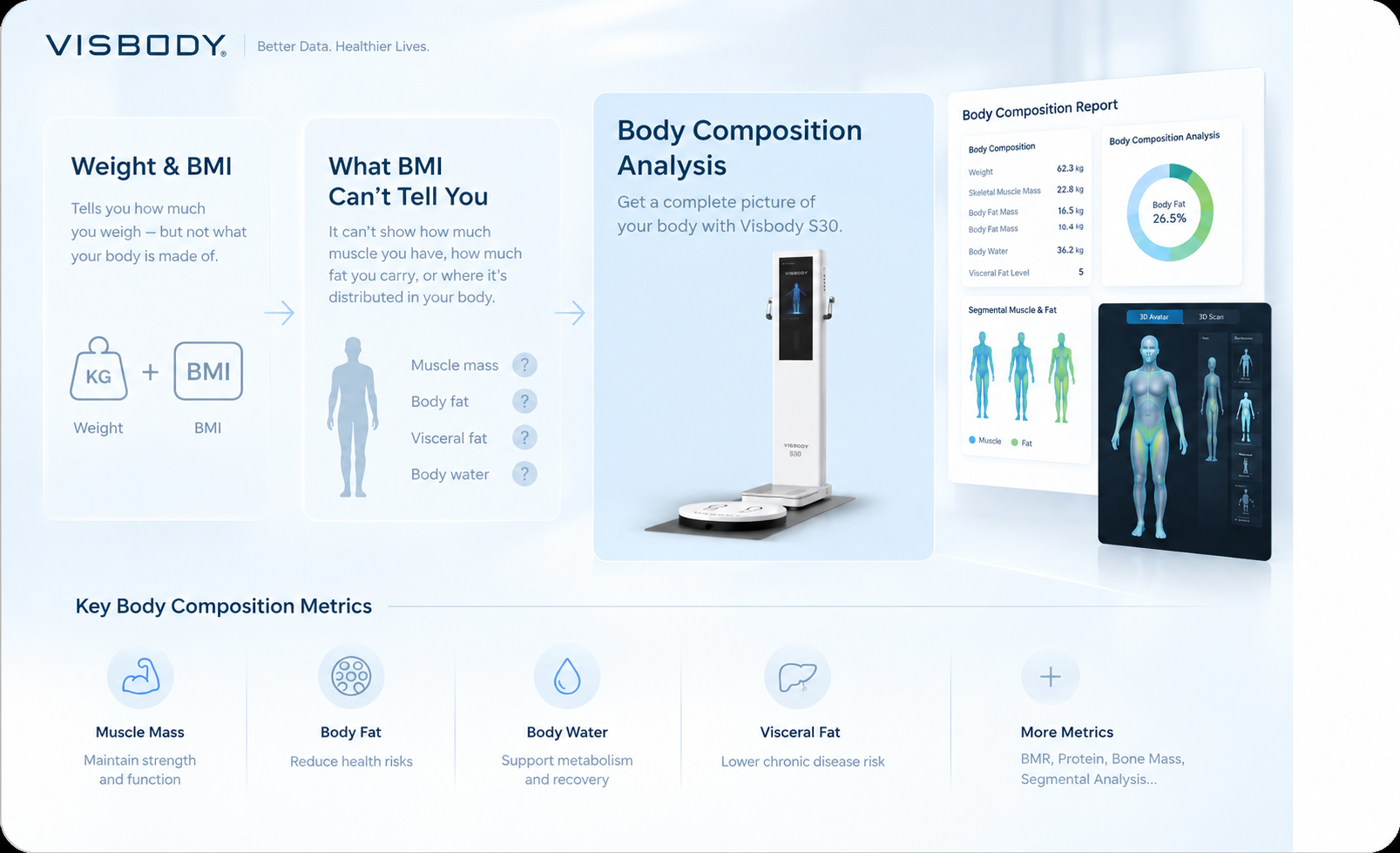
A Kihívás: Két embernek lehet egyforma súlya, de nagyon eltérő a teste
Idősebb felnőtteknek, A BMI önmagában kihagyhatja a képből a fontos információkat.
Két beteg BMI-je hasonló lehet, mégis az egyiknek viszonylag jól megőrzött izomtömege lehet, míg a másik jelentős izomvesztést tapasztalt magasabb testzsírszint mellett.
A skálán, hasonlónak tűnhetnek.
Testösszetétel szempontjából, viszont, nagyon eltérő élettani profilokat képviselhetnek.
Ez az egyik oka annak, hogy a szarkopénia az öregedés és a klinikai kutatások egyre fontosabb fókuszává vált.
Ahelyett, hogy egyetlen mérésre hagyatkozna, a vizsgálat a fizikai állapot több dimenzióját is figyelembe vette, beleértve izomtömeg, testzsír, izomerő, és a fizikai funkció, és ezekkel az intézkedésekkel a betegeket különböző testösszetétel fenotípusokba sorolta.
Között a 222 az elemzésbe bevont résztvevők:
- 59 nem volt sem szarkopéniája, sem elhízása
- 62 szarkopénia nélkül elhízott
- 74 szarkopéniája volt elhízás nélkül
- 27 szarkopéniája és elhízása egyaránt volt
A vizsgált populáció medián életkora volt 82.15 évek.
Egy ilyen régi és klinikailag összetett populációban, valaki súlyának ismerete csak egy része a történetnek.
Az értelmesebb kérdés:
Miből áll ez a súly – és hogyan változik az összetétel?
A Megközelítés: A Visbody S30 integrálása a multimodális testösszetétel-értékelésbe
Átfogóbb kép kialakítása az egyes betegek fizikai állapotáról, a kutatócsoport több értékelési módszert kombinált.
A Visbody S30 -ra használták BIA (Bioelektromos impedancia -elemzés) testösszetétel mérés, az eredményül kapott adatokkal a függelék vázizom-tömegindex kiszámításához (ASMI).
Egy időben, A kutatók CT-képalkotást használtak a vázizom területének felmérésére az L3 csigolya szintjén, miközben az izomerőt és más klinikai méréseket is beépítjük az elemzésbe.
Más szavakkal, A Visbody nem helyettesítette a CT-t vagy más klinikai értékeléseket.
Helyette, egy szélesebb körű klinikai kutatási munkafolyamat egyik összetevőjeként szolgált, kvantitatív testösszetételi adatok megadása, amelyek más megállapított mérések mellett figyelembe vehetőek.
Ez egy fontos különbségtétel.
A Visbody értéke nem az, hogy minden klinikai értékelést egyetlen eszközzel kell helyettesíteni.
Inkább, A digitális testösszetétel-mérés egy meglévő kutatási munkafolyamat gyakorlati részévé válhat – segít a kutatóknak számszerűsíthető testösszetételi adatok rögzítésében és más klinikai mérésekkel való integrálásában..
A A Visbody S30 a 3D testszkennelést BIA-alapú testösszetétel-elemzéssel kombinálja, izomtömeggel kapcsolatos mérések biztosítása, testzsír, testvíz, és egyéb testösszetételi paraméterek.
Fedezze fel a Visbody S30 3D testszkenner →
Kutatási eredmények: Miért számíthat többet az izomtömeg, mint a testsúly önmagában?
Az eredmények tovább szemléltetik, miért érdemes közelebbről megvizsgálni a testösszetételt.
Összehasonlítva a szarkopéniás résztvevőkkel, a szarkopéniában vagy szarkopén elhízással küzdőknél alacsonyabb volt markolat erőssége, ASMI, és CT-vel mért L3 vázizom terület, a fizikai funkció gyengébb mutatóival együtt.
A tanulmány kockázatelemzésében, a szarkopéniával kapcsolatos fenotípusok magasabb becsült 10 éves mortalitási kockázattal jártak együtt.
A többváltozós elemzés azt is kimutatta, hogy mind a szarkopénia, mind az elhízás egymástól függetlenül magasabb becsült halálozási kockázattal jár., -vel szarkopénia, amely erősebb asszociációt mutat.
Ezek a megállapítások megtévesztően egyszerű kérdést vetnek fel:
Ha csak valakinek a testsúlyát tudjuk, mennyit tudunk valójában a fizikai állapotukról?
CKD-ben szenvedő idősebb felnőttek számára, a válasz lehet: nem elég.
3A D testszkennelés és a testösszetétel elemzése egy újabb információréteggel szolgálhat– nem csak azt, hogy mennyi az ember súlya, de hogyan oszlik meg ez a súly között izom és zsír, és hogyan változhatnak ezek az összetevők az idő múlásával.
Az egyszeri méréstől a hosszirányú követésig
A testösszetételi adatok értéke a klinikai kutatásban túlmutat egyetlen mérésen.
Az számít, hogy a test hogyan változik az idő múlásával – hogy csökken-e az izomtömeg, nő a testzsír, vagy a test összetétele reagál a betegség változásaira, táplálás, gyakorlat, vagy beavatkozás.
Szabványosított testösszetétel -elemzés, a kutatók és az egészségügyi szakemberek meghatározhatják az alapvonalat, és összehasonlíthatják az eredményeket a nyomon követési értékelések során:
Alaphelyzet → Beavatkozás → Nyomon követés → Összehasonlítás
Egyetlen méréstől a változás pályájáig.
Ez egy fontos lépés az evolúcióban Testösszetétel -elemzés a longitudinális egészségmenedzsment és a klinikai kutatás felé.
Az Elvihető: A testösszetétel mérhetővé tétele
Ebben a tanulmányban 222 CKD-ben szenvedő idős felnőttek, kutatók használták a Visbody S30 BIA-alapú testösszetétel méréshez, az adatok integrálása CT-vel, izomerő, és egyéb klinikai intézkedések a testösszetétel fenotípusainak és a becsült egészségügyi kockázatok vizsgálatára.
Ennek az esetnek nem az a jelentősége, hogy a Visbody felváltja a meglévő klinikai értékeléseket. Inkább, bemutatja, hogyan digitális testösszetétel mérés integrálható egy meglévő klinikai kutatási munkafolyamatba.
A lehetséges alkalmazások közé tartozik:
- Geriátriai kutatás
- CKD kutatás
- Szarkopénia kutatás
- Táplálkozáskezelés
- Rehabilitációs kutatás
- Klinikai testösszetétel felmérés
A kórházak számára, kutatóintézetek, és egészségügyi szakemberek, a testösszetétel több lehet, mint egyszeri mérés – lehet mért, lánctalpas, összehasonlítva, és idővel figyelik.
A testösszetétel mérhetővé tétele megkönnyíti a hosszú távú változások áttekintését.
Tudományos kutatási felelősség kizárása
A Tudományos Jelentések tanulmány használta a Visbody S30 BIA-alapú testösszetétel méréshez egy szélesebb körű klinikai kutatási protokoll egyik összetevőjeként.
A tanulmány az volt nem a Visbody S30 pontosságának vagy diagnosztikai teljesítményének független ellenőrzése, és a jelentett halálozási és rokkantsági eredmények a következők voltak becsült kockázati pontszámok, nem pedig a prospektív követés során megfigyelt események.
A megállapításokat ezért úgy kell értelmezni egyesületek, nem bizonyíték az okozati összefüggésre.
Forrás
Tudományos jelentések – A szarkopén elhízás és a testösszetétel fenotípusai krónikus vesebetegségben szenvedő idősebb felnőtteknél: összefüggések a becsült halálozási kockázattal
Sorozattanulmányok szerzője “Iuliu Hatieganu” Orvosi és Gyógyszerészeti Egyetem
Tanulmány 1: A Visbody S30 támogatja a szarkopénia és a testösszetétel értékelését idősebb felnőtteknél
Tanulmány 2: A testösszetételtől a táplálkozási állapotig: Iuliu Hatieganu Egyetem kutatása a Visbody S30-zal
Tanulmány 3: Aktuális cikk